
APA Scorekeeper
American Poolplayers AssocSports
3.6433.00 Reviews
- Version
- 1.14.52
- Installs
- 100.00K
- Age Rating
- Everyone
Screenshots
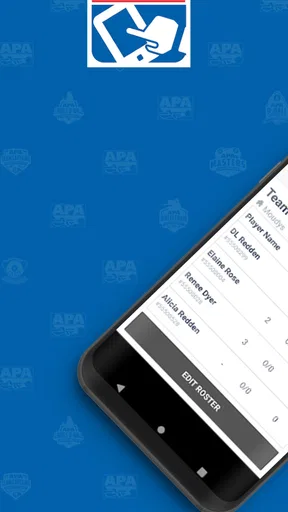
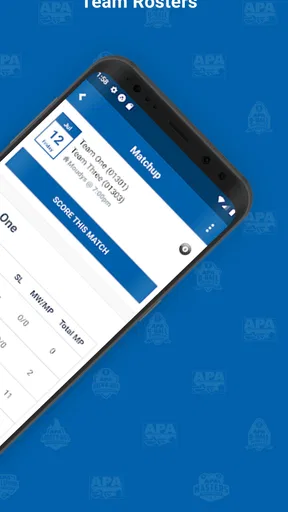
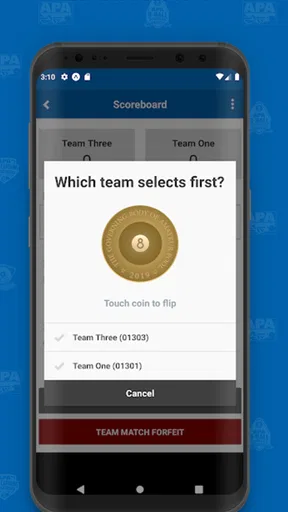
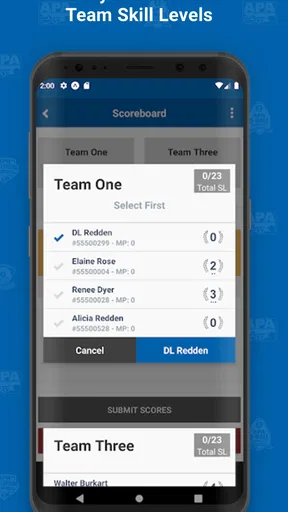
Our Review of APA Scorekeeper
 Analysis by Appyee
Keeping score during a league match sounds simple until the table is busy, players are waiting, and someone has to remember exactly what happened in the previous rack. APA Scorekeeper is built for that specific job. I see it as a practical sports app for people involved in APA or CPA Pool Leagues, rather than a general-purpose billiards companion. Its purpose is narrow, but that focus is also its main strength: it puts official league scoring on a phone instead of leaving the responsibility to paper, memory, or a separate notes app.
I reviewed it as the kind of tool I would use beside a pool table on league night. It is free, aimed at Everyone, and developed by American Poolplayers Assoc. The app has reached over one hundred thousand installs, with an average rating of 3.6 from more than eight hundred ratings and over four hundred written reviews. Those figures suggest a useful but not universally smooth experience, which matches my impression: the app can make match administration easier, but it rewards careful setup and attention while entering results.
How APA Scorekeeper fits into a real league night
The most important thing to understand is that this is not a training app, a digital cue, or a collection of pool games. It is a scoring tool for organized league play. If I were joining a casual evening with friends, I would probably not need it. If I were responsible for recording a team match and wanted a more structured alternative to a sheet of paper, its purpose would become much clearer.
A typical use case is easy to picture. I arrive at the venue, open the app, and use it while the teams move through their scheduled matches. Instead of writing a player’s result in one place and later transferring it somewhere else, I can keep the scoring process connected to the match itself. That reduces the small administrative mistakes that happen when a busy night involves several tables, interruptions, and people asking what has already been recorded.
The app’s value depends heavily on the person using it. A captain, scorekeeper, or league participant who already understands APA or CPA procedures is likely to get more from it than a newcomer who expects the app to explain every rule. It is best treated as a digital scoring surface, not as a substitute for knowing how the league operates.
I also appreciate that the app is free. For an occasional scorekeeper, paying for a specialized tool would be difficult to justify. Free access makes it easier for a team to try it without committing money, and it avoids the awkward situation where only one person owns the scoring solution. The trade-off is that I would still want a backup method available for an important match, especially until I was comfortable with the app’s workflow.
The current experience is focused, not overloaded
Many sports apps try to combine schedules, news, social features, statistics, messaging, and live results. APA Scorekeeper feels more purpose-built. That can make it easier to concentrate on the score, but it also means it should not be judged as a complete league-management platform. I would not choose it expecting broad team communication or a rich personal performance dashboard.
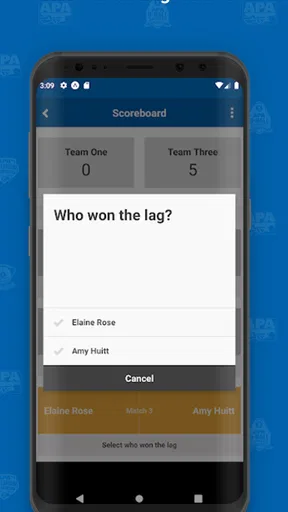
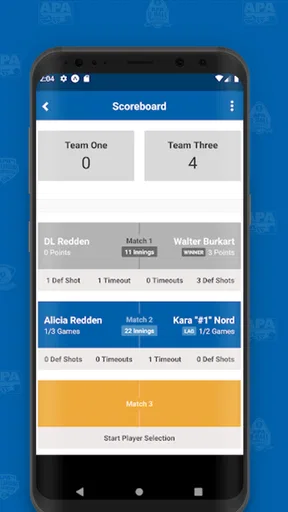
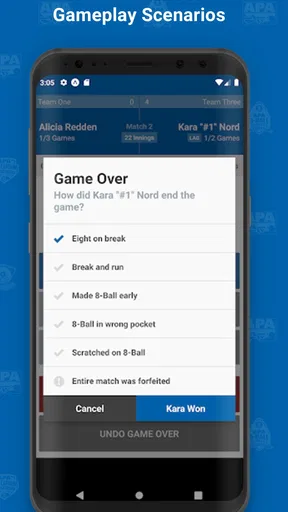
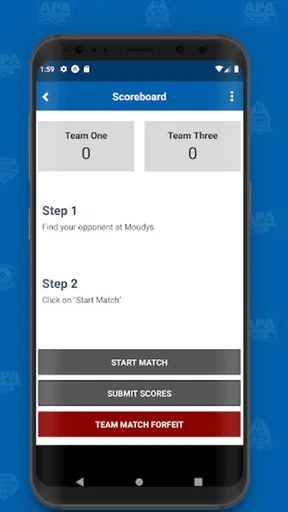
Its strongest scenario is the moment when a result needs to be entered correctly and quickly. A dedicated scoring app is less distracting than a general notes application, because the information is organized around the match rather than around a blank page. That structure matters when I am standing near a table and trying to keep up with play.
There is also a social advantage. When a team uses one recognized scoring method, disagreements about where a result was written down become less likely. The app does not remove the need for both sides to pay attention, but it gives the scorekeeper a clearer place to record the outcome. In a league environment, that consistency can be more valuable than flashy extras.
What the version and release history tell me
The app was released on October 7, 2019, and the current version is 1.14.52. That combination tells me this is an established utility rather than a brand-new experiment. A product that has continued to receive version updates has had time to settle into its role, and the current release gives existing users a reason to keep the app maintained on their phones.
At the same time, I would not assume that a long-running app automatically feels modern in every detail. Continued maintenance and major redesign are not the same thing. My expectation is that the current version is primarily about keeping the scoring experience usable and compatible, not transforming it into an entirely different product.
For someone already using an earlier release, updating is sensible before league night rather than during it. I would install the current version while I have time to open it, look through the available match flow, and make sure I understand where the important entries belong. That simple preparation is more useful than waiting until the first match is underway.
The minimum operating system is Android 7.0. That is helpful for people using older Android phones, although compatibility alone does not guarantee that every handset will feel equally comfortable. A smaller screen, aging battery, or slow response can matter when the phone is being used repeatedly between racks. I would test the app on the actual device intended for league use, not just on a newer phone belonging to another team member.
What changed for people who already rely on it
For existing users, the most meaningful benefit of a maintained current version is confidence in continuity. A scorekeeping tool becomes part of a team’s routine, and even small changes can affect where people tap or how they confirm a result. I would therefore treat an update as something to learn briefly, not something to ignore because the app appears familiar.
A good transition habit is to have the team agree on one person responsible for entering the score and another person available to verify the result. This is not because the app is unusable alone; it is because scorekeeping is a shared responsibility. When the room is noisy or the match is moving quickly, a second pair of eyes can catch a wrong player selection or an accidental confirmation before it becomes a disputed record.
I would also avoid switching between several phones during the same match unless there is a clear reason. Moving from one device to another creates opportunities for people to lose track of what has already been entered. A single designated phone, kept charged and visible to the scorekeeper, makes the workflow easier to follow.
Another practical lesson is to record results as soon as the relevant match is complete. Delaying entries until the end of the night may seem convenient, but it forces me to reconstruct events from memory. In a pool hall, conversations overlap and matches finish at different times. Entering each result promptly is one of the simplest ways to get more value from the app.
Where the app may feel limited
The narrow focus that makes APA Scorekeeper useful also limits its appeal. Someone looking for instructional videos, practice drills, cue recommendations, or a general pool community should look elsewhere. This app is not designed to improve my stroke or help me choose a break strategy. It addresses administration, not playing technique.
I would also be cautious about treating a phone as the only record in a high-pressure situation. Phones can run low on battery, be difficult to read under bright lights, or become inconvenient when the scorekeeper is constantly moving around the venue. A small paper backup or a clearly agreed emergency procedure is sensible. That is not a criticism unique to this app; it is a reminder that digital convenience should not become a single point of failure.
The 3.6 average rating indicates that the experience is mixed for users overall. I would not read that number as proof that the app fails at its main job, but I would take it as a reason to avoid assuming that every person will find the interface immediately intuitive. New users should practice the sequence before an official match, particularly if they are unfamiliar with league scoring conventions.
There is another trade-off between speed and verification. A fast interface is valuable when several matches are finishing close together, but speed can encourage careless taps. A slower paper method may feel clumsy, yet it can make people pause and double-check. With this app, I would deliberately build in a verbal confirmation: say the player and result aloud before finalizing the entry. That small habit turns the phone into part of a reliable process rather than an unchecked shortcut.
Who should use it, and who should skip it
I would recommend trying it to APA or CPA league players who regularly help with scoring, especially captains and team members who want a consistent digital routine. It is also a reasonable choice for someone replacing a handwritten score sheet and looking for a free starting point. The app’s value increases when the same people use it repeatedly and become familiar with the sequence.
I would be less enthusiastic for a casual group that only plays informal games and has no need to follow league scoring. In that setting, the extra structure may feel unnecessary. A basic notes app or paper may actually be faster because there is no league-specific workflow to learn.
I would also suggest a different category of tool for league organizers who need broad administration. If the main requirement is managing schedules, sending announcements, tracking attendance, or maintaining detailed team records, a dedicated league-management service may be a better fit. APA Scorekeeper can support the scoring moment, but I would not mistake it for an all-in-one organizer.
For players who use iPhones, the decision should be based on whether the version available for their device fits their league routine. The core question is not whether the app sounds useful in theory; it is whether the person responsible for the score can access it comfortably at the table and use it consistently. A familiar, dependable alternative is better than a technically suitable app that nobody wants to operate during play.
Small workflow choices that make a big difference
My first tip is to prepare before arriving at the venue. Open the app, confirm that it launches normally, and make sure the phone has enough charge for the evening. This sounds obvious, but scorekeeping tools are often tested only after the first match begins, when there is no patience for troubleshooting.
My second tip is to separate entering from debating. If players disagree about a result, pause the entry and resolve the question before saving anything. Do not use the app as a place to record guesses and promise to correct them later. A clean record is easier to trust than a sequence of temporary edits remembered by different people.
My third tip is to keep the scorekeeper physically close to the match information. Passing the phone around seems democratic, but it can create inconsistent entries and make it unclear who is responsible. One person should operate the app while both teams verify the relevant result.
A fourth useful habit is to review the completed match before putting the phone away. This is especially important if the evening has been interrupted by a break, a table change, or a conversation with another team. A quick review can catch an entry made for the wrong match while the details are still fresh.
Finally, I would teach a substitute the workflow before they need to take over. A backup person who has only seen the app once may hesitate at exactly the wrong moment. Five minutes of practice is enough to make a handoff less stressful and protects the team when the usual scorekeeper has to leave the table.
How it compares with paper and general phone tools
Paper remains a serious alternative. It works without a battery, is easy to pass around, and makes the entire record visible at a glance. For a team that values a physical archive or plays in a place where phones are inconvenient, paper may still be the better choice. Its weakness is that handwriting can be unclear and later transcription can introduce mistakes.
A general notes app is flexible but lacks the purpose-built structure I want during league play. I can write anything in a note, but I also have to decide how to format the match, where to place each result, and how to keep entries readable. That freedom is useful for unusual situations, yet it creates more responsibility for the person recording everything.
A full league-management platform may offer more organization, but it can also introduce more screens and more setup than a scorekeeper needs. APA Scorekeeper sits between those options: more structured than a blank note, but more focused than a broad administration suite. That middle ground is its clearest identity.
The right choice depends on the job. If I only need a quick informal record, paper wins on simplicity. If I need schedules and team communication, a broader service wins on scope. If I need a dedicated way to handle APA or CPA scoring on a phone, this app is the most direct fit of the three.
What I would watch in future updates
Because the app is already on version 1.14.52, I would watch how future releases affect the balance between reliability and ease of use. For a scorekeeper, a small improvement to clarity can matter more than a large new feature. Clear confirmation steps, easy correction of an honest mistake, and a workflow that remains quick in a crowded pool hall would all be valuable areas to protect.
I would also pay attention to how well the app serves both experienced league users and people taking over scoring for the first time. Experts want speed, while newcomers need confidence that they are entering the right information. The best evolution would support both without turning a focused tool into a complicated management system.
Existing users should read update notes carefully and avoid updating for the first time minutes before a match. New users should install it early, rehearse the scoring process, and agree with their team on a backup plan. Those steps answer the practical questions that matter most: whether it will fit into a real evening, whether another person can take over, and whether the team can recover if the phone becomes unavailable.
My final view is positive but specific. APA Scorekeeper is worth trying when your problem is organized APA or CPA match scoring, not when you want a complete pool companion. It is free, focused, accessible on older Android versions, and supported by an established developer. Its limitations are real: the average user experience is not flawless, the app depends on careful human entry, and it does not replace broader league-management tools or a backup record.
I would recommend it to a team that wants to move away from scattered paper notes and is willing to establish a disciplined scoring routine. I would skip it for casual games or for anyone expecting coaching, social features, or a full administrative system. Used with a designated scorekeeper, a quick verification habit, and a simple backup plan, APA Scorekeeper can remove a surprisingly annoying part of league night without pretending to solve every problem around the pool table.
Verdict
Strengths of APA Scorekeeper
- Quickly records scores during APA league matches.
- Simple interface makes it easy to use between shots.
- Helps track team and player performance over time.
- Useful for keeping match details organized in one place.
- Reduces the need for paper score sheets and manual calculations.
Limitations of APA Scorekeeper
- May feel limited outside APA league scoring needs.
- Requires accurate manual input to keep statistics reliable.
- Some features may depend on an active internet connection.
- The interface can take time to learn for first-time users.
- Not ideal for users seeking advanced customization options.
Other Releases by American Poolplayers Assoc
View All
Pool League
Sports4.6
Similar Picks in This Category
View All
BeSoccer: Soccer Live Score
BeSoccer apps4.3

Cricbuzz - Live Cricket Scores
Cricbuzz.com3.7

NFL
NFL Enterprises LLC2.4

Da Fit
MO YOUNG LIMITED3.6

ESPN
Disney4.5

LiveScore: Live Sports Scores
LiveScore Limited4.5
Frequently Asked Questions
What is APA Scorekeeper and who is it designed for?
APA Scorekeeper is a digital scoring tool designed for players and teams who enjoy American Poolplayers Association (APA) league matches. It helps users record scores, track match progress, and manage scoring details more conveniently than using paper. It is primarily useful for APA participants, team captains, and league organizers who want a quick way to keep match information organized during play.
Can APA Scorekeeper be used without an internet connection?
The app may allow some scoring activities to continue when your connection is limited, but online features can depend on internet access and the way the current version is configured. Before starting an important match, it is sensible to open the app, sign in if required, and confirm that scoring tools work correctly. Keep a backup record if your venue has unreliable Wi-Fi or mobile coverage.
Does APA Scorekeeper automatically submit official league results?
Users should not assume that every score entered in APA Scorekeeper is automatically submitted as an official APA league result. The available submission and synchronization options may depend on your league, account permissions, and the app version. After recording a match, review the displayed information carefully and follow your local league’s procedures for confirming or reporting official scores.
Is APA Scorekeeper free to download and use?
APA Scorekeeper may be available to download without an upfront charge, but the overall experience can vary depending on account requirements, league participation, or features connected with APA services. App-store listings and in-app notices are the best sources for current pricing and access conditions. Check those details before downloading, especially if you expect advanced tools or official league integration.
What information is needed to use APA Scorekeeper effectively?
To get the most from APA Scorekeeper, you may need relevant team, player, league, or match information, and some features could require an APA-related account or login. Accurate names, handicaps, divisions, and match details are important because incorrect entries can affect the score record. New users should familiarize themselves with their league’s scoring rules before relying on the app during competition.
